

Advancing Clinical Education Across Borders: From Design to Practice
Cintana Health Sciences continues to expand its global impact by strengthening one of the most critical elements of healthcare education: how we prepare faculty to design and deliver meaningful clinical learning. Recent visits from Dr. Manoela Malta, the Vice President of Health Sciences at Cintana Education, to East-West University in Georgia, Universum International College in Kosovo, and Mapúa University in the Philippines offer a compelling view of what becomes possible when structured clinical education and standardized faculty training are implemented with clarity and rigor.

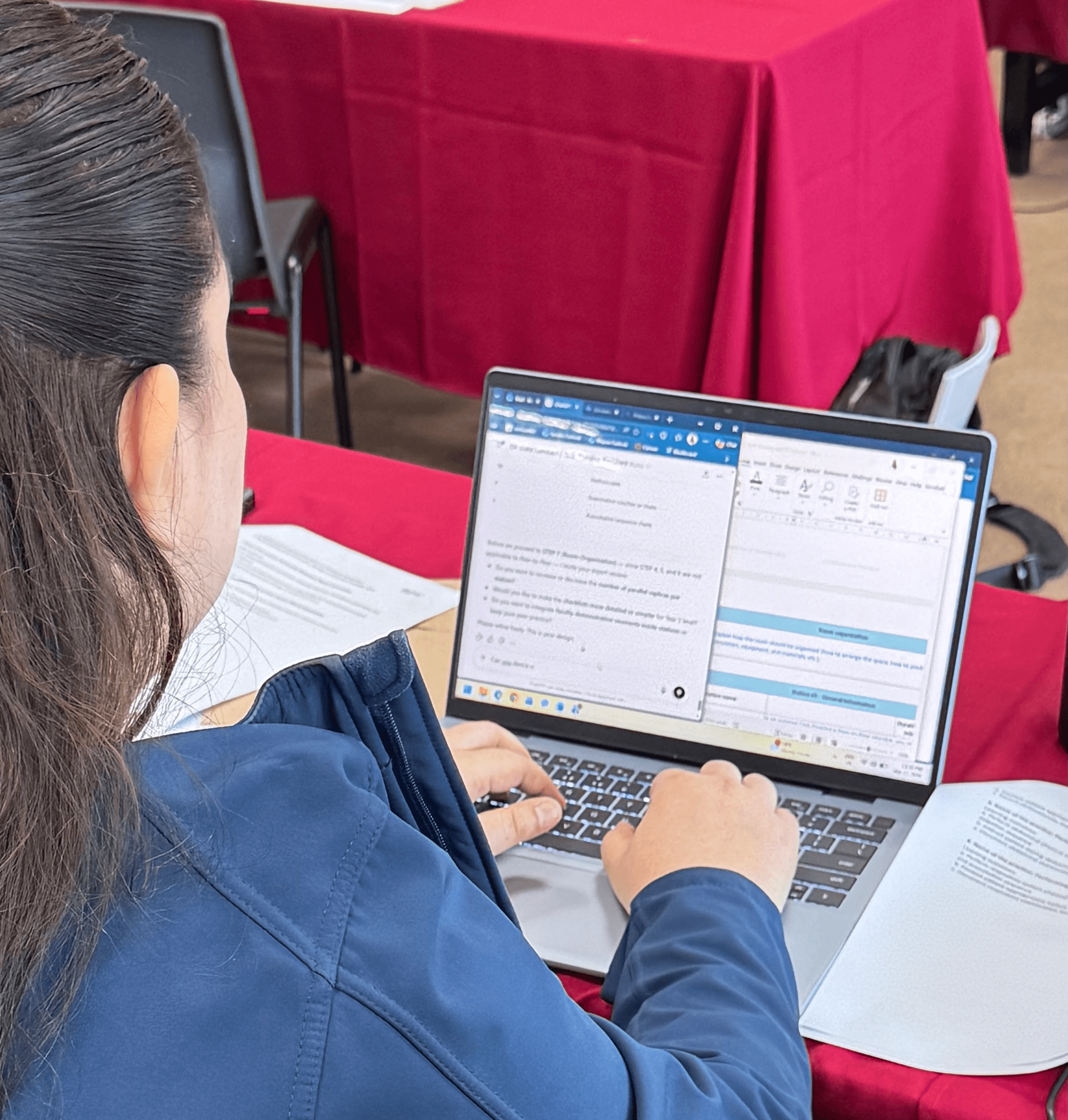
At East-West University Medical School, a two-day Clinical Education Designer Level Workshop brought together 25 faculty members with a shared goal: to move beyond traditional teaching approaches and actively design high impact clinical learning experiences. This level of training is not about delivering content. It is about building instructional designers within the faculty, professionals who are capable of creating experiences that shape how future physicians think, decide, and act in complex clinical environments.
Using Cintana Health Sciences AI Agents, participants designed a series of clinical education practices that directly reflect real world challenges. These included scenarios such as diagnostic disclosure of advanced malignancy during routine follow up, managing refusal of life saving treatment while respecting patient autonomy, and prioritizing care during resource scarcity when multiple critical patients arrive simultaneously. In total, more than a dozen practices were developed, each grounded in clinical authenticity and educational intentionality.
The workshop focused on three core methodologies selected from a broader portfolio of more than thirty: Isolated Task training, Peer-to-Peer Practice, and Simulation Scenarios. Each methodology plays a distinct role, from developing psychomotor skills to enabling higher order capabilities such as clinical reasoning, decision making, and crisis management. This structured layering is what allows students to move from performing tasks to managing complexity.

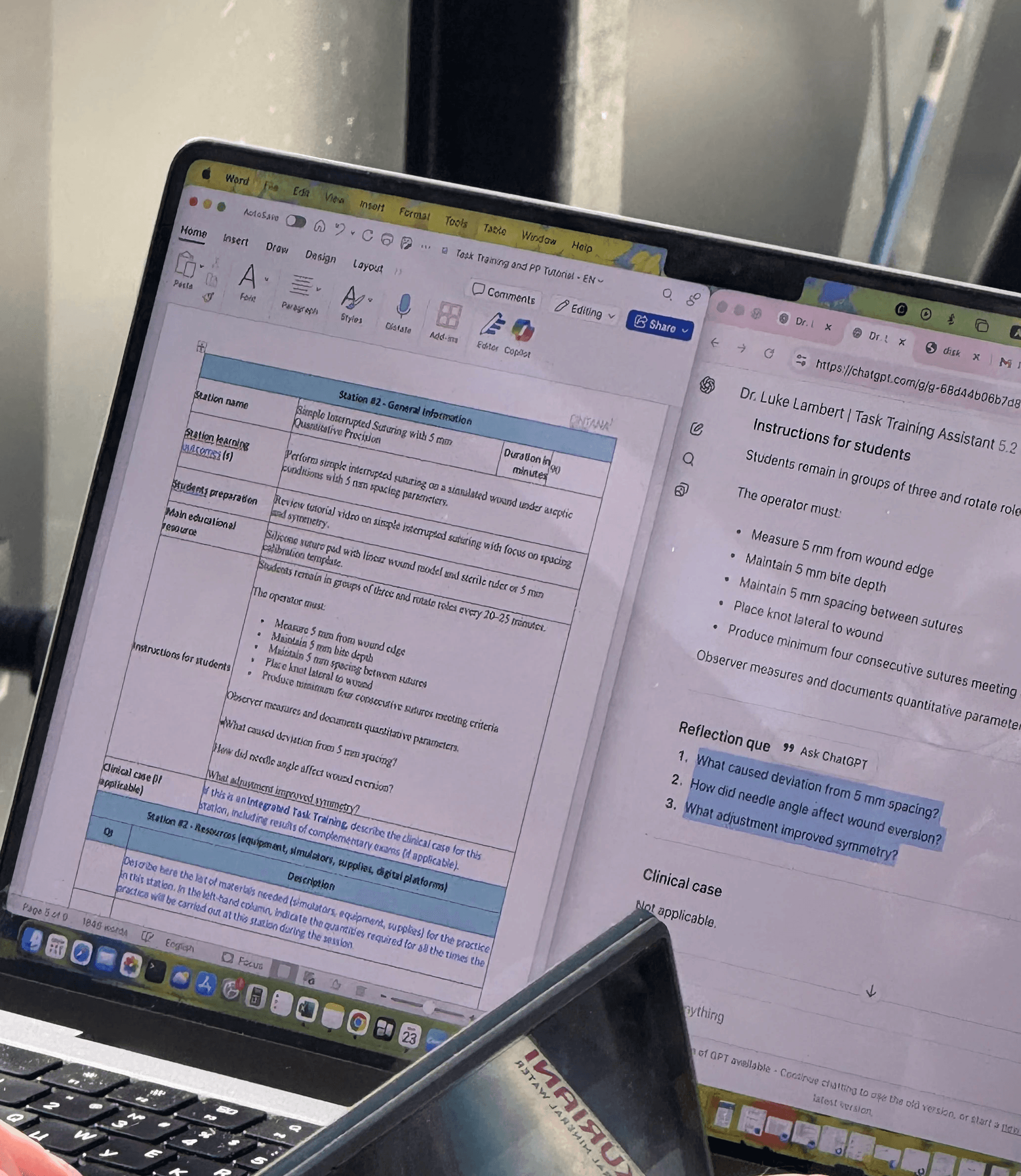
A similar level of ambition and scale was evident during the Designer Level Clinical Education Workshop at Mapúa University on March 17 and 18. The workshop brought together 33 faculty members from Mapúa University, Mapúa Malayan Colleges Laguna (MMCL), and Mapúa Malayan Colleges Mindanao (MMCM). The diversity of disciplines represented was particularly notable, including Medicine, Nursing, Physical Therapy, Pharmacy, Medical Technology, Biology, and Psychology. This interprofessional composition reflects the reality of healthcare and strengthens the design of learning experiences that mirror collaborative practice.

During the two-day workshop, faculty designed 50 clinical education practices under the supervision of Dr. Malta and with the support of Cintana Health Sciences AI Agents. The breadth and depth of these practices demonstrated a strong alignment with real clinical and community challenges. Among the most impactful were early recognition of sepsis in a hospitalized patient for Nursing, early mobilization of a post stroke patient with hemodynamic instability for Physical Therapy, and acute confusion in an elderly hospitalized patient for Medicine. Additional practices addressed complex and high-risk situations such as managing a potentially fatal drug interaction for Pharmacy, responding to a biosafety breach involving a level three organism for Medical Technology, facilitating a community meeting on a suspected environmental biological hazard for Biology, and setting boundaries in emotionally dysregulated patient interactions for Psychology.
Mapúa University has already established itself as a reference point for contemporary learning environments through the Human Health Learning and Innovation Center at Makati campus. What is now emerging is a parallel leadership in innovative clinical education strategies. By extending this approach across Mapúa, MMCM, and MMCL, the institution is positioning itself to deliver a coherent, future oriented model of health sciences education.

In Kosovo, at Universum International College, the focus shifted from design to delivery. Over two full days, 33 faculty members participated in the Instructor Level Clinical Education Workshop. Here, the emphasis was on equipping educators to effectively facilitate clinical learning sessions using structured methodologies. More than 30 health sciences students joined the sessions, actively engaging in Isolated Task Training, Peer-to-Peer practices, and three Simulation Scenarios tailored to different disciplines.
The response from students was immediate and revealing. They described feeling more confident, more prepared, and more aware of the complexity of real clinical situations. Their feedback highlighted not only the engagement generated by these sessions, but also their perceived impact on readiness for practice. This level of student insight reinforces the value of experiential, well designed clinical education.
Across all three institutions, one principle stands out: clinical competence does not emerge from exposure alone. It requires structured, intentional, and progressively designed experiences. The methodologies implemented across Cintana Health Sciences partner institutions create something that is often missing in traditional clinical environments: a protected space where students can practice, make mistakes, and reflect without risk to patients.

Reflection is the critical mechanism that transforms experience into learning. Without it, even highly realistic scenarios remain isolated events. With it, these experiences become transformative, shaping how future healthcare professionals interpret situations, make decisions, and take responsibility for patient care.
Underlying these efforts is a standardized Faculty Development Program tailored to Health Sciences professors that ensures consistency and scalability. The program begins at the introductory level, where faculty are introduced to the Cintana Health Sciences learning model. It then advances to the instructor level, where educators learn to manage and facilitate clinical education sessions effectively. Finally, at the designer level, faculty are trained to create and integrate clinical education practices within the curriculum itself.

This structured progression is essential. Without a shared framework and a common language for clinical education, innovation remains fragmented. With it, institutions can build aligned, high quality learning ecosystems that consistently produce practice-ready graduates.
What we are seeing at East-West University, Mapúa University, Mapúa Malayan Colleges Laguna, Mapúa Malayan Colleges Mindanao, and Universum International College is not just successful training. It is the emergence of a new standard. Hands on, engaging, and deeply relevant clinical education experiences, supported by faculty who are both skilled instructors and intentional designers. The consistently high levels of satisfaction reported by participants reflect not only the quality of the training, but its alignment with what healthcare education urgently requires.
The opportunity ahead is clear. By continuing to invest in structured clinical education and standardized faculty development, we are not only improving how we teach. We are transforming how future healthcare professionals are prepared to care for patients, with competence, confidence, and responsibility.
Relevant Stories

Alliance News
12 selected faculty members from different Health Sciences programs at Universum International College in Pristina, Kosovo, came together for a two-day Clinical Education Designer Level Workshop
Europe
·
8 min read

Milestone
At Galala University's third graduation ceremony, 25 students crossed the stage as the first graduates of the Galala University–Arizona State University dual-degree programs.
Middle East / North Africa
·
6 min read